"Gross margin by region, fiscal QTD"
Excel | Dashboards | Business Apps | AI Assistant
Trusted answers from large, complex company data
Tessallite helps companies turn scattered, high-volume data into answers people can trust. Your team defines each important KPI once, decides who is allowed to see it, and lets Tessallite deliver the same answer to leaders, analysts, dashboards, spreadsheets, business applications, and AI data assistants.
"Gross margin by region, fiscal QTD"
Excel | Dashboards | Business Apps | AI Assistant
Most reporting problems are not caused by a lack of data. They are caused by different teams using different definitions for the same business question. Tessallite gives your organisation one controlled place to define revenue, margin, customers, dates, regions, access rules, and ownership. After that, every report and question can use the same approved meaning.
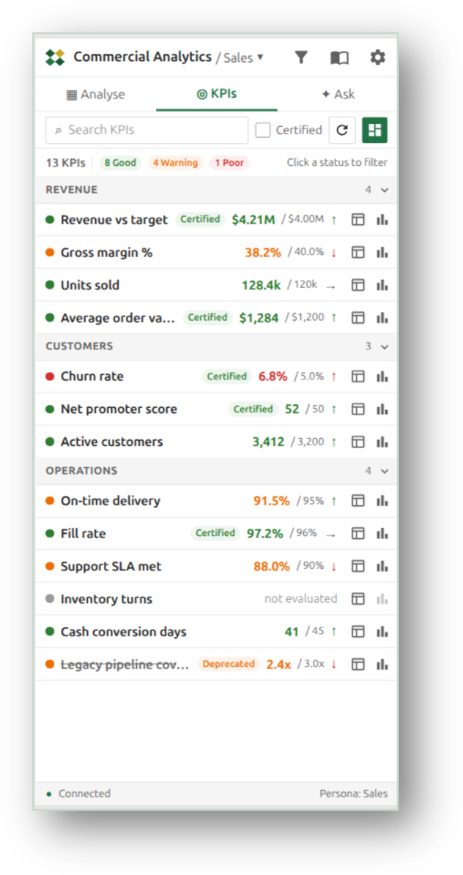
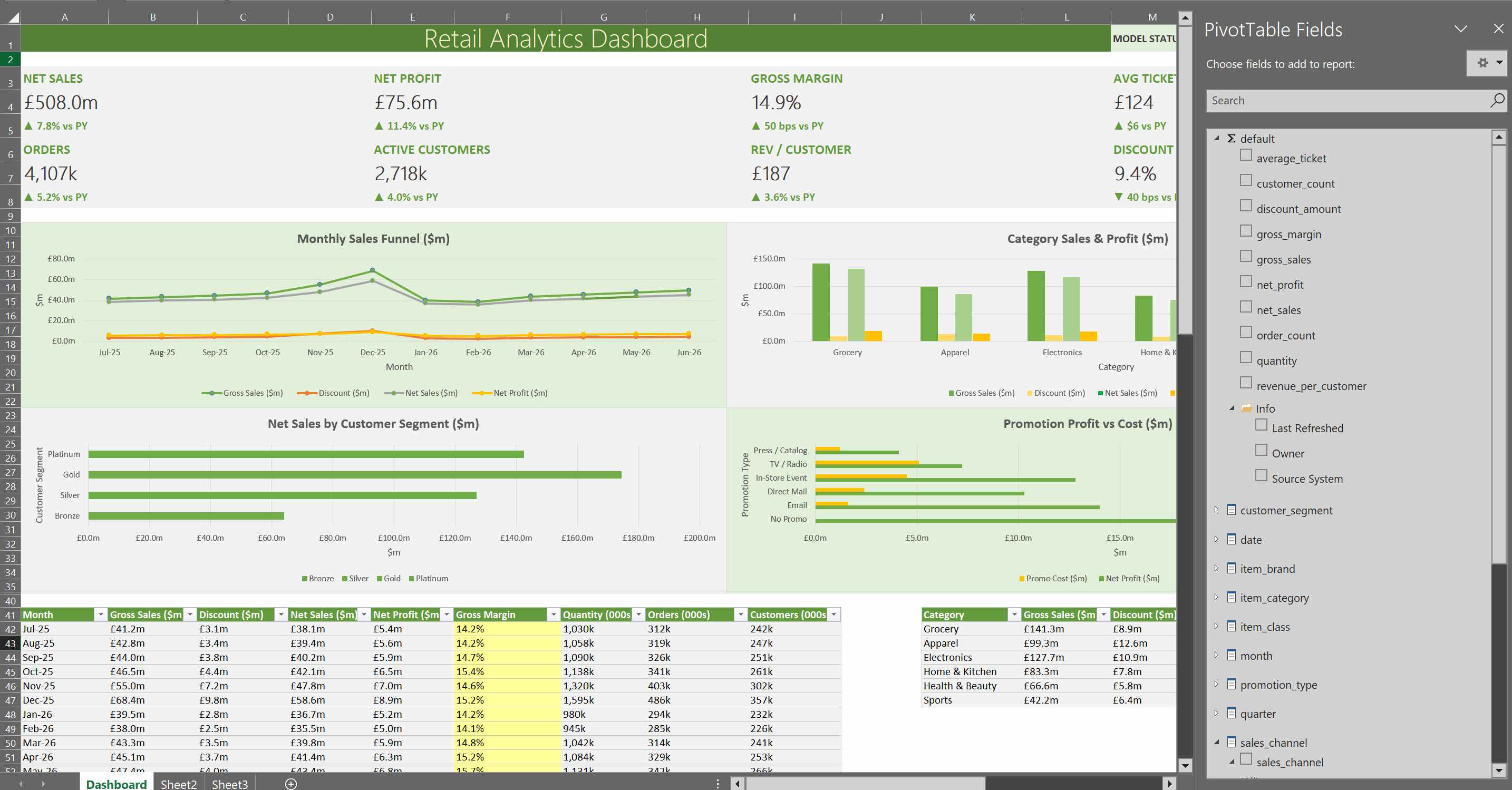
Executives get the same trusted KPI in spreadsheet and dashboard workflows, with clear context about ownership and freshness.
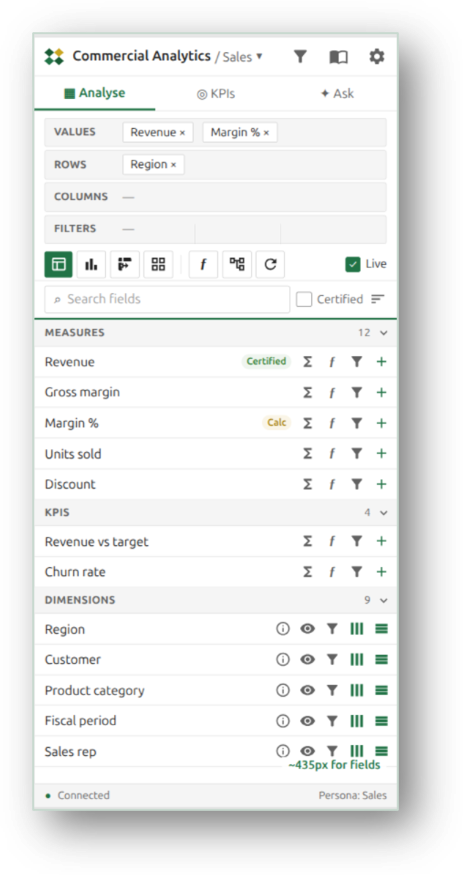
Analysts explore data without rebuilding definitions from scratch or worrying that their answer uses a different business rule.
Data teams keep control over definitions, changes, security, source connections, and the way each answer is calculated.
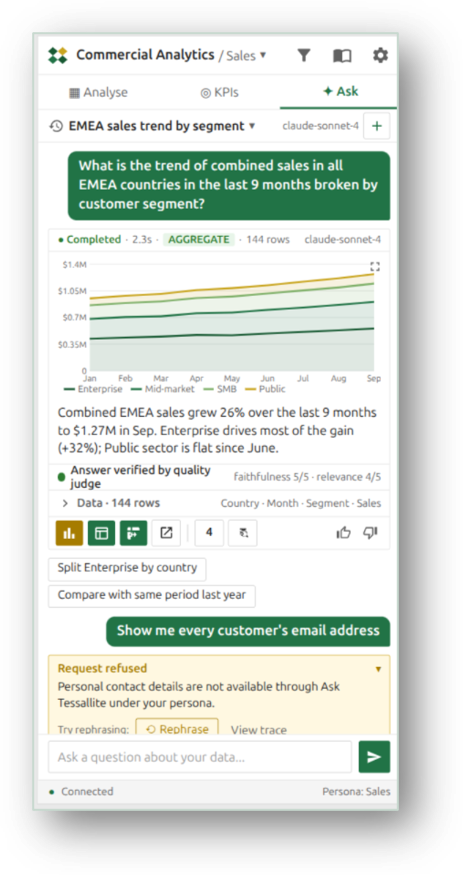
AI data assistants answer questions from approved business definitions instead of guessing from raw database tables.
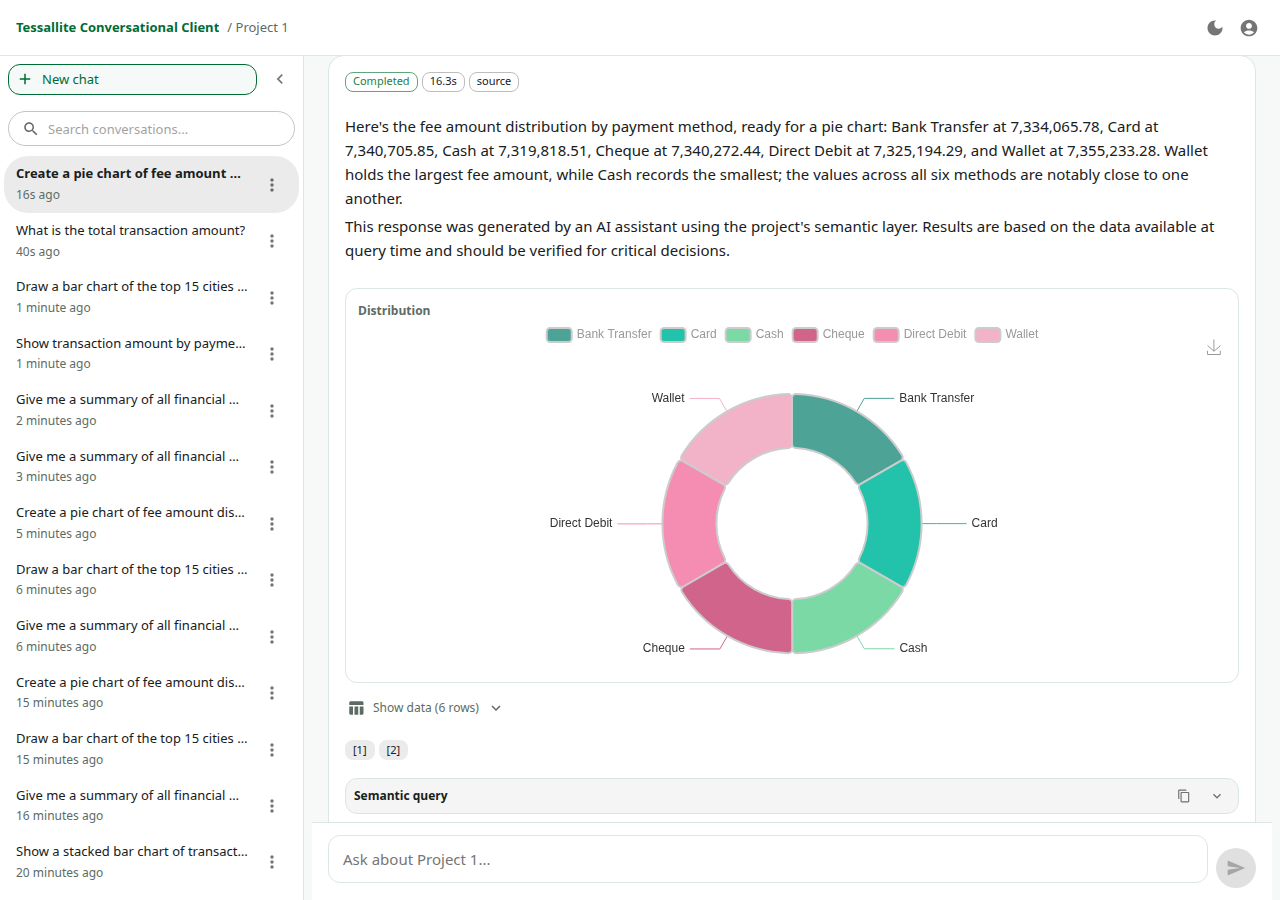
AI is useful only when it understands the business rules. Tessallite gives AI data assistants a safe foundation: approved KPI definitions, approved data fields, approved date rules, and the same access restrictions used by the rest of the company. The result is a conversational experience that is easier for business users, while still controlled by the data team.
A manager can ask about revenue, margin, customers, products, or a financial period without knowing where the data is stored or how the tables connect.
The assistant works from governed business terms and KPI rules, so it is less likely to invent its own meaning for important numbers.
Conversation history and answer traces help teams review what was asked, which data was used, and why the answer was returned.
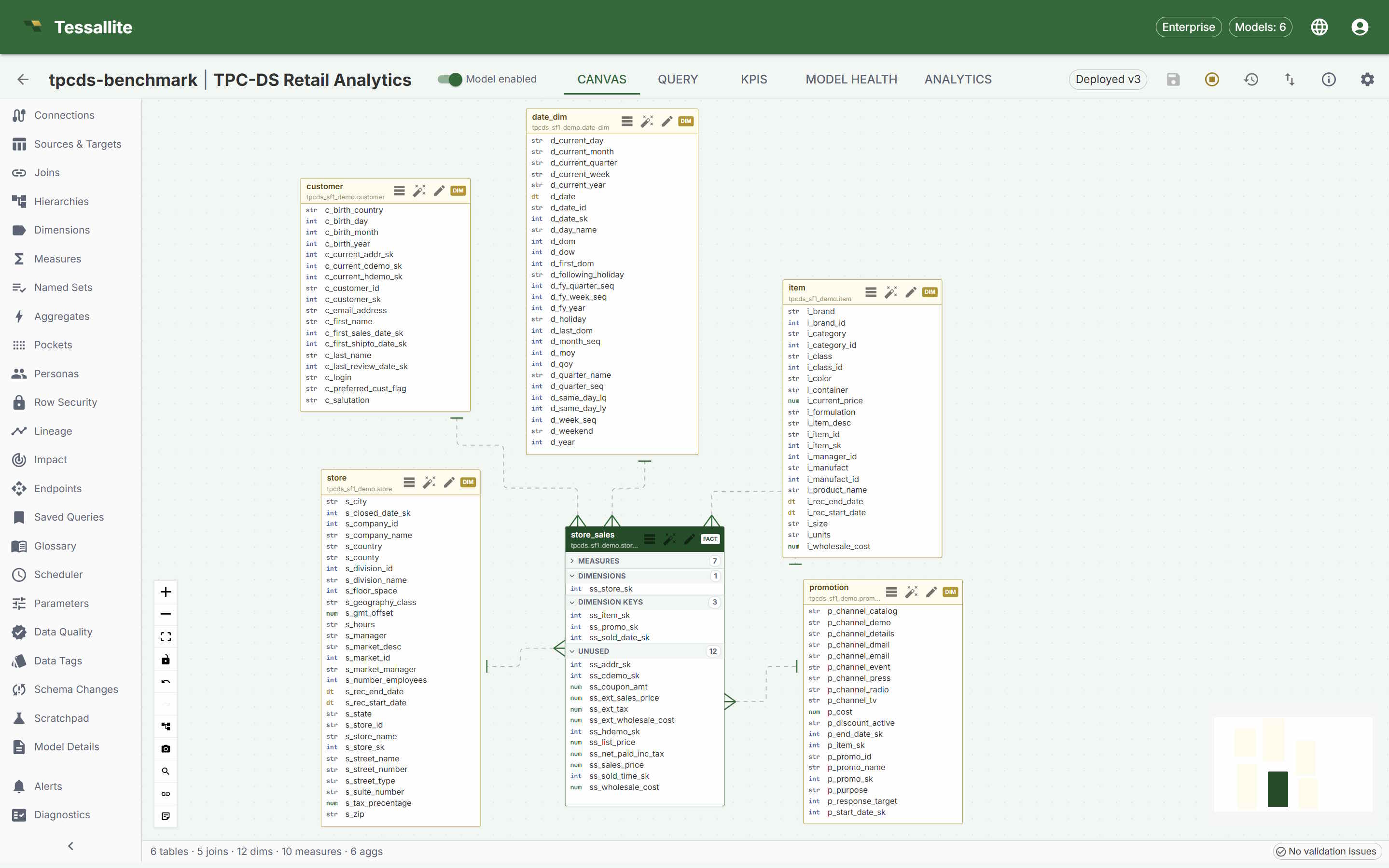
Behind every simple business answer there are rules: which source is correct, how tables relate, what counts as a customer, how margin is calculated, which calendar to use, and who owns the definition. Tessallite gives data teams a clear workspace to build, test, approve, version, and publish those rules so business users do not have to manage that complexity themselves.
Tessallite is designed for environments where not everyone should see the same data. The platform can shape what each person, role, or audience is allowed to ask for, while keeping the rules consistent across dashboards, spreadsheets, specialist tools, applications, and AI assistants.
Separate workspaces, project access, and controlled administration help keep each customer, department, or team in the right area.
A finance user, sales manager, and executive can each see the right version of the data, with automatic filters and permissions applied.
Sensitive fields can be labelled and hidden consistently, so private columns are not accidentally exposed through another tool.
Freshness, data origin, owners, glossary definitions, and review history help stakeholders understand where an answer came from.
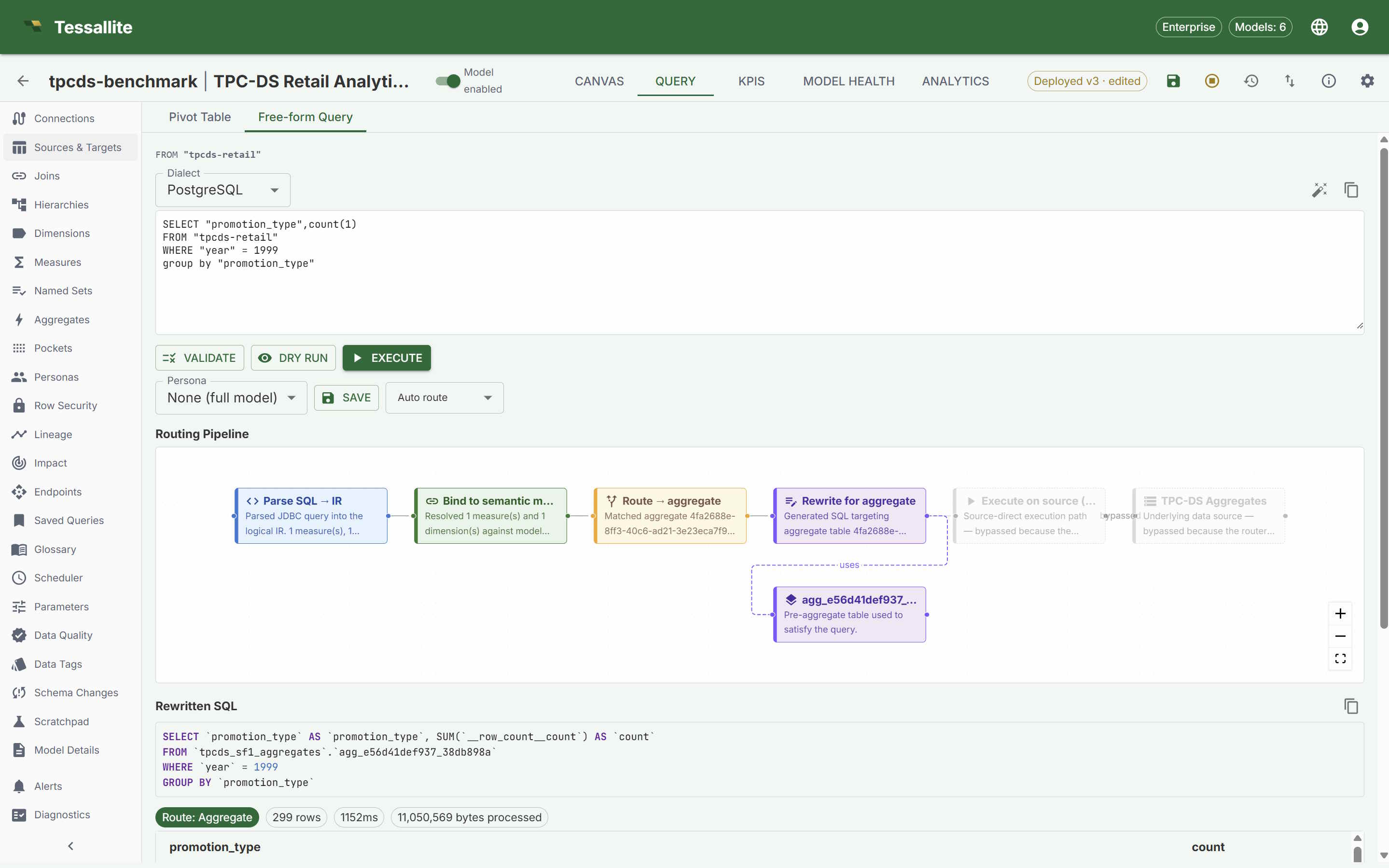
When many people keep asking the same type of question, it is wasteful to scan the largest data tables again and again. Tessallite learns which answers can be prepared safely, keeps those prepared answers fresh, and still falls back to the original data when a prepared answer is not appropriate.
Frequently used totals and breakdowns can be prepared in advance so dashboards and spreadsheets respond quickly.
Teams can prepare carefully controlled slices of data for repeated investigation without exposing everything.
If Tessallite cannot use a prepared answer safely, it goes back to the original source and records the reason.
Refresh schedules, usage history, budgets, validation, and retirement rules prevent old prepared data from becoming a liability.
Tessallite is not trying to replace every reporting tool. It sits between your data and the places where people ask questions, so the same approved business definitions can reach spreadsheets, dashboards, internal applications, advanced users, and AI data assistants.
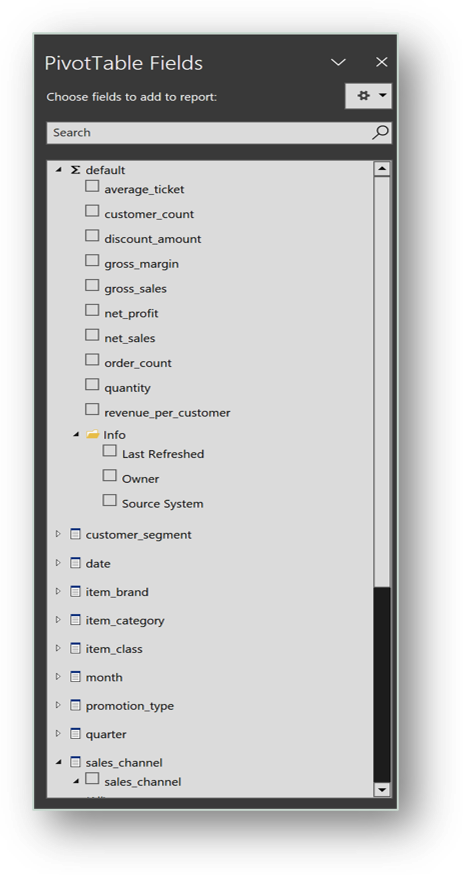
Business users can keep working with familiar pivot tables, dashboards, folders, and refresh workflows.
Data teams can still use their preferred analysis tools when they need deeper inspection or advanced investigation.
Internal products and customer-facing applications can request governed answers without rebuilding metric logic.
Tessallite can connect to large company data platforms, including cloud data systems and private data environments.
A reporting layer is only useful if it stays reliable over time. Tessallite gives owners the checks, logs, and review screens needed to see what is used, what is slow, what changed in the source data, and what might break before users notice.
When someone asks a question, Tessallite does more than send it directly to a database. It checks the business meaning, confirms the user's permissions, chooses the safest and fastest way to answer, and returns the result with context that makes it easier to trust.
Match the question to approved KPI definitions, business terms, date rules, audience rules, and the current published version.
Choose a prepared answer when it is safe, or go back to the original data when accuracy requires it.
Return the answer with context such as freshness, owner, data origin, and why Tessallite used that path.
Many customers cannot send sensitive data or metadata to uncontrolled services. Tessallite is designed for private and controlled deployments, so your organisation can keep credentials, question history, and data movement under its own operational rules.
Keep definitions, question history, credentials, and operational logs inside your controlled environment.
Guided setup, environment checks, service health views, restart prompts, and controlled teardown flows help operations teams manage the platform.
Documentation covers setup, business concepts, modelling, connected tools, administration, and troubleshooting.
"Tessallite was built to close the gap between very large data and practical business answers. The next generation of analytics will be conversational, but it must still be governed, explainable, and fast."
Founder & Lead Architect, Tessallite
Book a walkthrough focused on your KPIs, reporting workflows, AI data assistant plans, and the cost of repeated large-data queries.